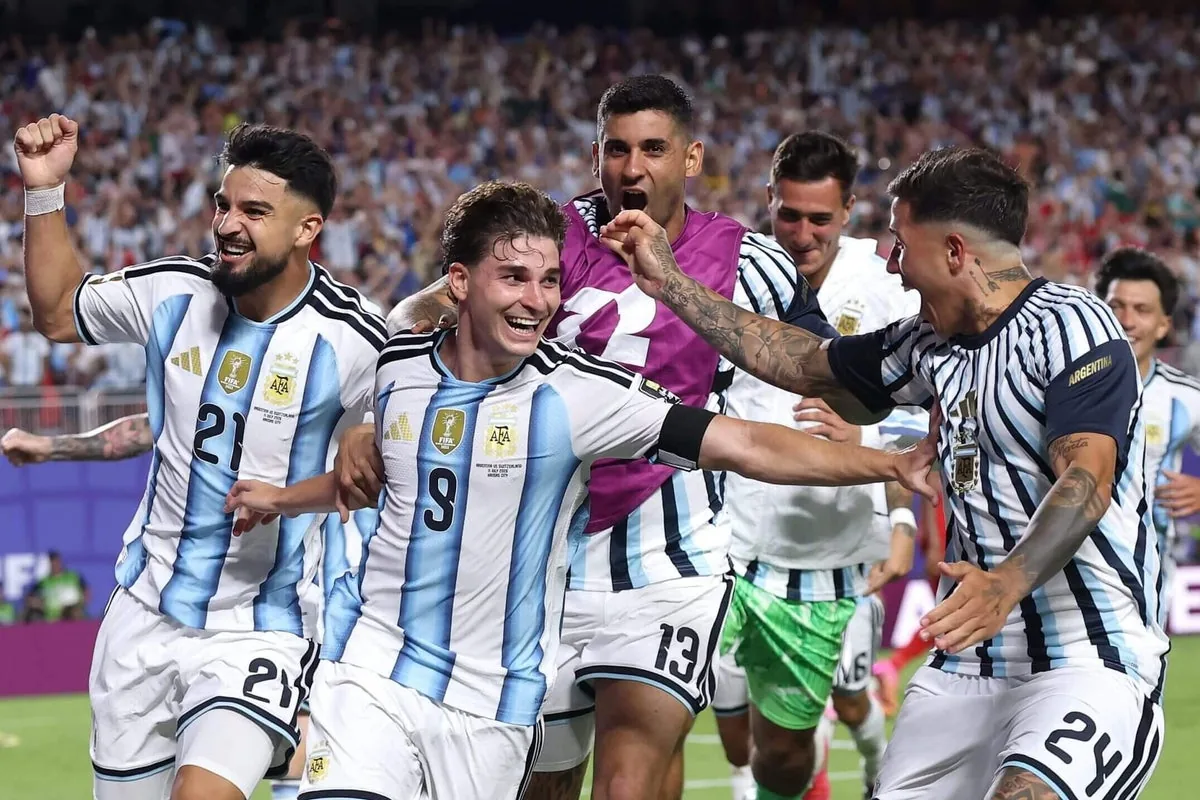
Mistaken Identity Red Card Incident
In a significant development at the World Cup quarter-final in Kansas City, Switzerland forward Breel Embolo was sent off for what has been termed a “mistaken identity” red card. This incident occurred during his team’s match against Argentina, making Embolo the first player to be penalised under this new rule at the tournament. The dismissal took place in the 72nd minute of the game on Saturday.
The sequence of events began when Argentina’s Leandro Paredes initially received a yellow card for a foul on Embolo. However, the Video Assistant Referee (VAR) intervened, prompting a review of the decision in the 71st minute. Following the VAR consultation, the on-field referee, Joao Pedro Silva Pinheiro, reversed his initial call. Instead of Paredes, Embolo was shown a second yellow card for simulation, leading to his red card and subsequent dismissal.
The Swiss forward, who had already received a booking earlier in the match, was deemed to have dived during the tackle with Paredes. The VAR team, operating remotely, identified the incident and recommended a review. After reviewing the replays and consulting with the VAR team, Referee Pinheiro rescinded Paredes’s yellow card and issued one to Embolo instead. Embolo left the pitch in tears, consoled by his teammates.
Switzerland’s coach, Murat Yakin, expressed his dissatisfaction with the decision, stating that there was no reason for a yellow card and describing it as a harmless situation. He criticised the rule, calling it unacceptable and asserting that it destroyed his team’s game. However, some pundits, including former Major League Soccer striker Bradley Wright-Phillips, suggested that Embolo had let his team down, potentially costing them a spot in the semi-finals.
Impact on the Match and Rule Clarification
At the time of Embolo’s dismissal, the match was evenly poised with the score at 1-1, with less than 20 minutes remaining in normal time. Despite being reduced to 10 men, Switzerland managed to hold the score until the end of normal time. However, they ultimately conceded two goals in extra time, resulting in a 3-1 defeat and their elimination from the tournament. Argentina will now face England in the semi-finals.
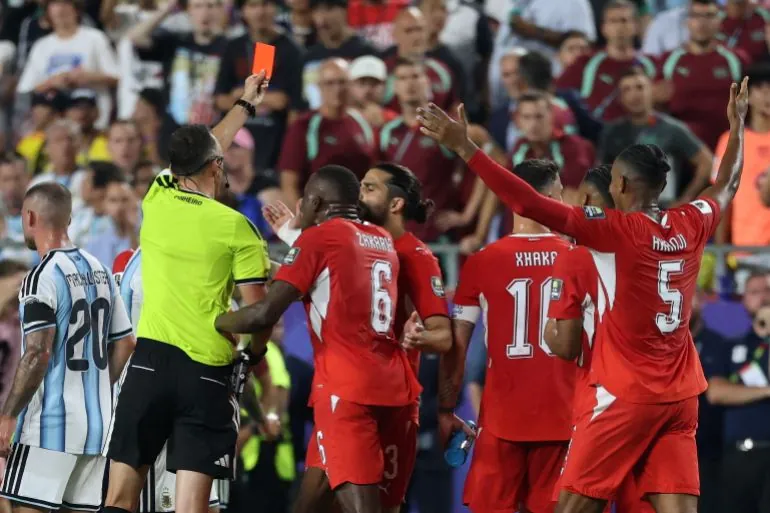
The concept of “mistaken identity” is defined by the International Football Association Board (IFAB) as a “match-changing” error. It occurs when a referee issues a yellow or red card but has clearly penalised the wrong player for the offence. The new VAR rules implemented for the World Cup allow such mistaken identity issues to be identified and reviewed by the VAR team.
The rule specifically states that if a player is booked or sent off, but the foul was committed by the opposition team, the decision can be changed. An earlier instance of this rule being applied involved USA defender Tim Ream, who was initially booked for a foul on Miguel Almiron. Following a VAR review, the referee overturned his decision, rescinded Ream’s caution, and instead booked Almiron for simulation.
In Embolo’s case, the VAR team in Dallas reviewed multiple replays, which suggested there was no contact and that Embolo had simulated a dive. The referee was recommended to review the incident, and upon doing so, withdrew the booking for Paredes and issued one to Embolo. This decision was in line with the new rules, which allow for the review of mistaken identity when the wrong player of either team is penalised.
The irony of the situation is that if the referee had not initially shown a yellow card to Paredes, the incident could not have been reviewed solely on the merits of Embolo’s dive. The initial card to Paredes was necessary to trigger the VAR protocol for a mistaken identity review. This specific application of the rule led to Embolo’s red card in the 72nd minute of the quarter-final match.
Read Also
- Kansas City: Argentina faces Switzerland in World Cup quarter-finals
- Miami: Bellingham double fires England past Norway into World Cup semi-finals
- Noskova clinches first Wimbledon title after overcoming mid-match nerves
- Miami: England advance to World Cup semi-finals after extra-time win over Norway
Source: aljazeera.com